
Cut fleet electricity costs 20–30% — without a single missed morning departure
ChargeVyne schedules depot charging across your entire fleet against real-time grid tariffs and transformer limits. Departure-ready every morning. Electricity bill down every month.
Flat-rate charging burns money. Peak demand penalties punish every morning shift.
Demand charge spikes
When every vehicle plugs in at 6 AM, peak demand charges on your electricity bill can equal 30–40% of your total energy cost. Most fleet operators don't know it's happening until the invoice arrives.
Transformer headroom limits
Your site transformer has a hard kW ceiling. Uncontrolled simultaneous charging pushes past it, triggering protection relays or forcing an expensive capacity upgrade long before it's needed.
Departure SLA pressure
Every van needs 80% SoC by 07:00. Manually staggering charge starts is guesswork — one overnight outage or delayed arrival and a route doesn't run. Missed departures cost far more than energy savings.
Grid-aware scheduling that learns your fleet rhythm
ChargeVyne ingests real-time EPEX SPOT tariff data, your transformer capacity limit, and each vehicle's departure time and target SoC — then builds a minute-by-minute charge schedule that minimises energy cost while guaranteeing every vehicle is ready on time.
- Real-time EPEX SPOT and day-ahead tariff integration — charges when electricity is cheapest
- Transformer limit enforcement with dynamic load allocation across all active charge points
- OCPP 1.6 and 2.0.1 smart charging profiles — works with your existing hardware
Three steps from plug-in to optimal schedule
Connect
ChargeVyne connects to your charge point management system via OCPP. No hardware changes — your existing chargers become smart charging infrastructure in hours, not months.
Optimise
The scheduling engine ingests live tariff data from EPEX SPOT, transformer headroom, and each vehicle's departure time and required SoC. It runs a constrained optimisation every 15 minutes and updates every active charge profile.
Dispatch
Every vehicle is charged to its target SoC by its departure window. Your operations team sees a live dashboard. Your finance team sees a lower electricity bill. Nothing else changes.
Everything your fleet operations team needs
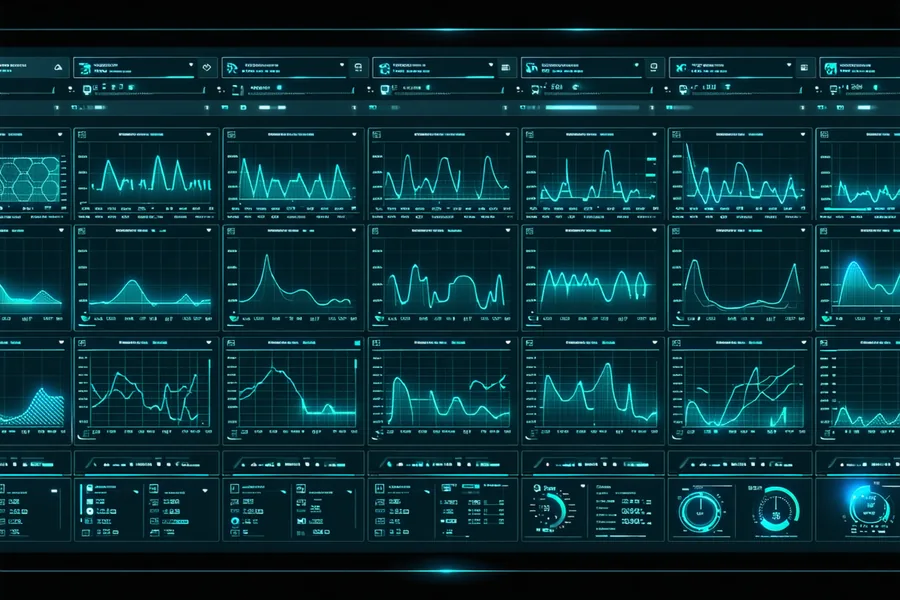
From live charge monitoring to post-session cost attribution — all in one operational dashboard.
Active vehicles : 42 / 48 Charging now : 31 Ready: 11 Grid draw (now): 187 kW Limit : 250 kW OK : ✓ Tariff (live) : €0.082/kWh Next window : 02:00 Morning dep. : 07:00 All vehicles ≥80% SoC by: 06:47 VAN-001 64% 80% CHARGING 05:22 11000 VAN-002 78% 80% NEAR-COMPLETE 04:51 3200 TRK-007 41% 90% CHARGING 06:18 22000 VAN-019 80% 80% READY -- 0
- SoC[v, dep_time_v] ≥ target_SoC_v ∀ v ∈ fleet - Σ kW[v,t] ≤ transformer_limit_kW ∀ t - 0 ≤ kW[v,t] ≤ charger_max[v] ∀ v, t ▶ Run complete in 0.84s Projected cost tonight : €38.40 (vs. flat-rate: €54.20) Saving: €15.80 (29.1%) All 42 departure constraints satisfied
00:00 52.10 CHARGE — off-peak window 01:00 48.40 CHARGE — cheapest hour 02:00 49.80 CHARGE 03:00 61.20 CHARGE — moderate 06:00 142.50 AVOID — morning peak 07:00 168.90 AVOID — peak demand window ▶ Schedule shifted 81% of charging to 00:00–04:00
OCPP 1.6 ✓ CONNECTED OCPP 2.0.1✓ CONNECTED EPEX SPOT ✓ LIVE FEED Telematics◎ POLLING Fleet TMS ◎ WEBHOOK Last sync : 2026-03-15 23:47:02 UTC Next poll : 2026-03-15 23:52:00 UTC
What depot operations teams say
We were sceptical that software alone could guarantee departure readiness while cutting electricity costs. Within the first billing period, all 34 vans were ready by 07:00 and our demand charge bill was down 26% — no hardware changes, no extra headcount.
The transformer limit was our barrier to adding more charge points. We were quoted €180,000 for a grid connection upgrade. ChargeVyne's load scheduling eliminated the bottleneck entirely — 22 chargers running on the same 250 kW transformer, zero protection relay trips.